Published:
April 8, 2026
Last Updated:
March 19, 2026
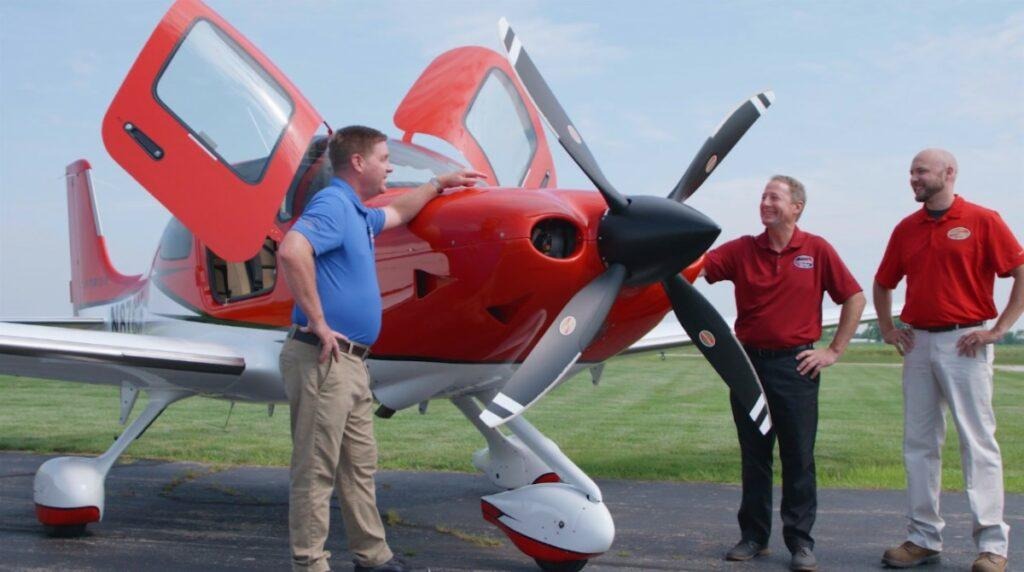
In aerospace and aviation, precision is not just a goal. It is a requirement. Every maintenance task, inspection procedure, and operational workflow must be executed correctly to ensure safety, compliance, and performance.
However, many organizations still rely heavily on manuals, slide decks, and in-person instruction. While these methods are necessary, they often fall short when it comes to clarity, consistency, and scalability.
This is where aerospace training video production becomes essential.
Modern aerospace companies are increasingly investing in aerospace video production services to transform complex procedures into clear, repeatable, and visually guided training experiences. The result is improved safety, faster onboarding, and stronger compliance across teams.
The aerospace industry operates under strict regulatory oversight and high operational risk. Training programs must ensure that every individual understands procedures with complete accuracy.
Even small misunderstandings can lead to operational inefficiencies or safety incidents. This is why traditional training methods alone are no longer sufficient.
Safety is the primary driver behind most training initiatives in aerospace. Video enhances safety by making procedures easier to understand and remember.
Training videos show exactly how tasks should be performed in real-world environments. This includes:
By visually demonstrating procedures, employees gain a clearer understanding than they would from text alone.
Video allows teams to highlight both correct and incorrect practices. This helps reinforce:
This is especially important in high-risk scenarios such as aircraft maintenance or system inspections.
With video, every employee receives the same instruction regardless of location or trainer. This ensures:
Organizations that implement structured training video production often see measurable improvements in safety performance and operational consistency.
Compliance is a central requirement in aerospace operations. Training programs must demonstrate that employees have received accurate and standardized instruction.
Video also makes it easier to update training materials when regulations or procedures change. Instead of rewriting manuals, organizations can update specific modules within a training library.
This flexibility is critical in industries where compliance requirements evolve frequently.
Onboarding new employees in aerospace can be time-intensive due to the complexity of systems and procedures.
Video-based training significantly improves this process.
For example, a new technician can watch a procedural video multiple times before performing a task, reducing the likelihood of errors during early-stage training.
Many aerospace systems involve internal components and processes that are difficult to explain through static visuals.
Training videos solve this by combining:
If your training involves complex systems, understanding when to use animation is important. You can work with us to determine the best approach for technical clarity.
Technicians can follow detailed video walkthroughs that show:
For advanced systems such as drones or counter-UAS platforms, training videos:
Video helps standardize production workflows by showing:
Organizations can create structured modules covering:
While training is the primary focus, video content often extends into other areas of the business.
Training content can be adapted into product demo video production assets that help explain system functionality to clients and stakeholders.
Elements of training videos can also support aerospace marketing video production, particularly when showcasing expertise, processes, or innovation.
In some cases, drone video production can enhance training by providing aerial views of facilities, layouts, or operational environments.
To achieve effective results, training videos must be carefully developed. Poor execution can reduce clarity and impact.
Effective training content balances technical accuracy with clarity and usability.
Ensure all content is validated by engineers, technicians, or safety personnel.
Break training into shorter segments so updates can be made easily.
Use visuals, annotations, and pacing to improve understanding.
Ensure videos can be used across LMS platforms, internal systems, and secure environments.
Training videos should be reusable across onboarding, compliance, and operational training.
Creating effective training videos requires a structured approach.
This process ensures that training content is both accurate and scalable.
It is the creation of video-based training content designed to teach aerospace procedures, systems, and safety protocols through clear visual instruction.
Training videos combine visuals, motion, and context, making complex procedures easier to understand and remember compared to text alone.
Yes. They provide standardized, repeatable instruction and can be integrated with LMS platforms for tracking and certification.
Most effective training videos are modular and range from 3 to 10 minutes per topic, allowing focused learning and easy updates.
Aerospace organizations operate in environments where clarity, consistency, and accuracy are essential. Training videos provide a scalable way to improve safety, support compliance, and accelerate onboarding.
By combining instructional, training, and technical video production, companies can create a more effective learning ecosystem that reduces errors and improves performance.


Next Step
If you're looking to improve safety, streamline onboarding, and modernize your training approach, explore our aerospace video production services and discover how video can transform your aerospace training programs.