Published:
April 8, 2026
Last Updated:
March 24, 2026
Construction and infrastructure projects are complex, fast-moving, and highly coordinated. Multiple teams operate simultaneously across large sites, often under strict timelines and safety requirements. Communicating progress, ensuring compliance, and maintaining stakeholder alignment can be challenging when relying on traditional documentation methods.
Drone cinematography addresses these challenges by providing a complete, real-time visual perspective. It does more than capture footage. It delivers actionable insight, improves communication, and creates a reliable visual record of progress.
For organizations managing large-scale builds, investing in professional drone video production services ensures that every phase of a project is documented with precision, clarity, and compliance.
Traditional site photography captures isolated moments. While useful, it often lacks the context needed to fully understand site conditions, progress, and coordination.
Drone video provides a broader, more meaningful perspective.
This is particularly valuable for project managers, contractors, and investors who need accurate, up-to-date insights without being physically present on site.
Example:
A large infrastructure project such as a highway expansion can be documented weekly using aerial footage. Stakeholders can quickly assess progress, identify bottlenecks, and verify alignment with project timelines.
Drone cinematography supports both operational and communication needs across the full project lifecycle.
Consistent aerial capture provides a visual timeline of the project from start to completion.
Benefits include:
Example:
A commercial construction project can use weekly drone flights to document foundation work, structural development, and final build-out. These visuals can be compiled into progress reports or time-lapse sequences.
This approach enhances transparency and accountability across all project phases.
Construction sites are dynamic environments where safety is a constant priority.
Drone footage provides an overhead perspective that helps teams:
Example:
A site manager can use aerial footage to review equipment positioning and pedestrian pathways, ensuring that workflows minimize risk.
This is particularly effective when integrated into training video production or instructional video production programs for consistent safety communication.
Construction and infrastructure projects often require ongoing communication with external stakeholders.
Drone video enhances these communications by providing:
Example:
A developer can use aerial footage to update investors on project milestones, showcasing tangible progress and reinforcing confidence.
These visuals also integrate well with marketing video production and brand video production, especially for firms looking to demonstrate capability and reliability.
Beyond storytelling, drone technology supports technical workflows.
High-resolution aerial imagery can be used for:
While specialized surveying may require additional tools and expertise, drone video production complements these efforts by providing visual context alongside data.
Large infrastructure projects often attract public attention and require skilled labor.
Drone footage helps organizations:
Example:
A public infrastructure project can use aerial video to demonstrate progress and maintain transparency with local communities.
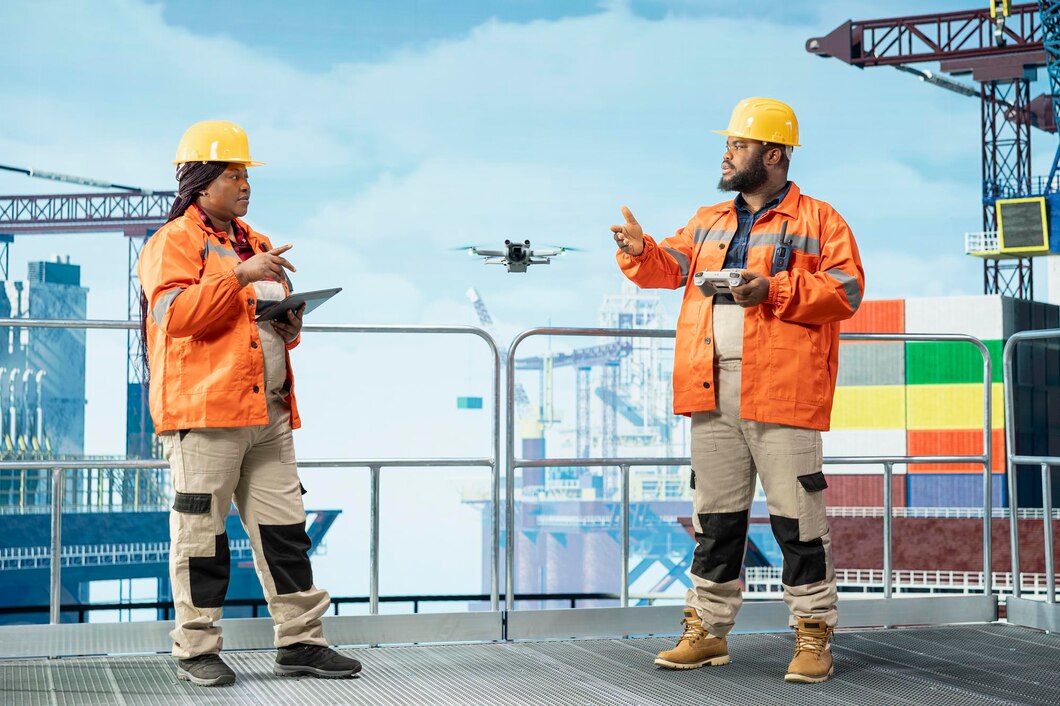
Construction environments introduce unique challenges for aerial filming.
These include:
Working with certified professionals ensures that all drone operations are conducted safely and legally.
Without these safeguards, drone operations can introduce unnecessary risk and liability.
For a deeper understanding of compliance requirements, refer to the related blog on hiring a certified drone video team.
Even with the right tools, poor execution can limit the value of aerial footage.
Irregular drone flights make it difficult to track progress accurately.
Solution:
Establish a consistent capture schedule aligned with project milestones.
Capturing footage without a defined purpose can result in unusable or redundant content.
Solution:
Determine whether the footage is intended for documentation, marketing, training, or analysis before filming begins.
Drone footage is most effective when it supports a larger narrative.
Solution:
Integrate aerial visuals into corporate video production, reports, and stakeholder communications.
Effective drone video production requires more than capturing footage. It requires alignment with project goals and communication needs.
Organizations that approach drone cinematography strategically gain more value from every flight.
Industry sources such as ConstructionDive have highlighted how drone technology is transforming jobsite management. From improving visibility to enhancing safety and communication, drones are becoming a standard tool in modern construction workflows.
This shift reflects a broader move toward data-driven, visually supported decision-making in infrastructure projects.
Construction and infrastructure projects are too complex to rely on limited visual documentation. Drone cinematography provides the clarity, consistency, and insight needed to manage projects effectively and communicate progress with confidence.
Whether you are overseeing a large-scale build or managing multiple sites, aerial video ensures that no detail is lost and every milestone is clearly documented.
If your organization needs to improve visibility, communication, and documentation across construction projects, drone video production is a practical and proven solution.
Engage Video Production delivers professional drone cinematography services designed for active, high-risk environments where compliance and precision are essential.
From progress tracking to stakeholder communication, the right aerial strategy can transform how your projects are managed and presented.


High-impact aerial video requires more than advanced equipment. It requires strategic planning, regulatory expertise, and a clear understanding of how to communicate complex environments from above.
Partner with a team that knows how to translate large-scale operations into clear, compelling visual narratives. With the right approach to drone video production, you can showcase your capabilities with precision, clarity, and confidence across every audience.