Published:
April 8, 2026
Last Updated:
March 19, 2026
Aerospace and aviation technologies are among the most complex systems ever engineered. From advanced avionics and propulsion systems to unmanned aerial systems and defense-grade platforms, communicating how these technologies work is a challenge across every stage of the business.
Engineering teams need precision. Sales teams need clarity. Stakeholders need confidence.
This is where aerospace video production for complex technology plays a critical role. By combining visual storytelling with technical accuracy, video enables aerospace organizations to communicate clearly across training, product demonstrations, and marketing environments.
Companies that invest in the right mix of training, instructional, and product video production gain a measurable advantage in how their innovations are understood and adopted.
Technical documentation remains essential in aerospace. However, it often falls short when used as the primary communication tool across diverse audiences.
For example, a video manual or instructional video can demonstrate a system in minutes that might take dozens of pages to explain in writing.
In high-stakes environments such as aerospace, defense, and first responder operations, clarity directly impacts safety, compliance, and decision-making.
Video is uniquely effective because it combines motion, context, and narrative. It allows aerospace companies to explain not just what a system is, but how it works and why it matters.
Used for onboarding, compliance, and operational procedures, these videos:
Learn how this applies in practice in aerospace training video production, where clarity and consistency are essential.
For technologies such as UAS, c-UAS systems, and advanced composites, product videos:
These are especially valuable when aligned with aerospace product demo video production strategies that translate engineering into business value.
Replacing or supporting traditional manuals, these videos:
Even in highly technical industries, perception matters. Marketing videos help:
For deeper insight, see how this fits into aerospace marketing video production.
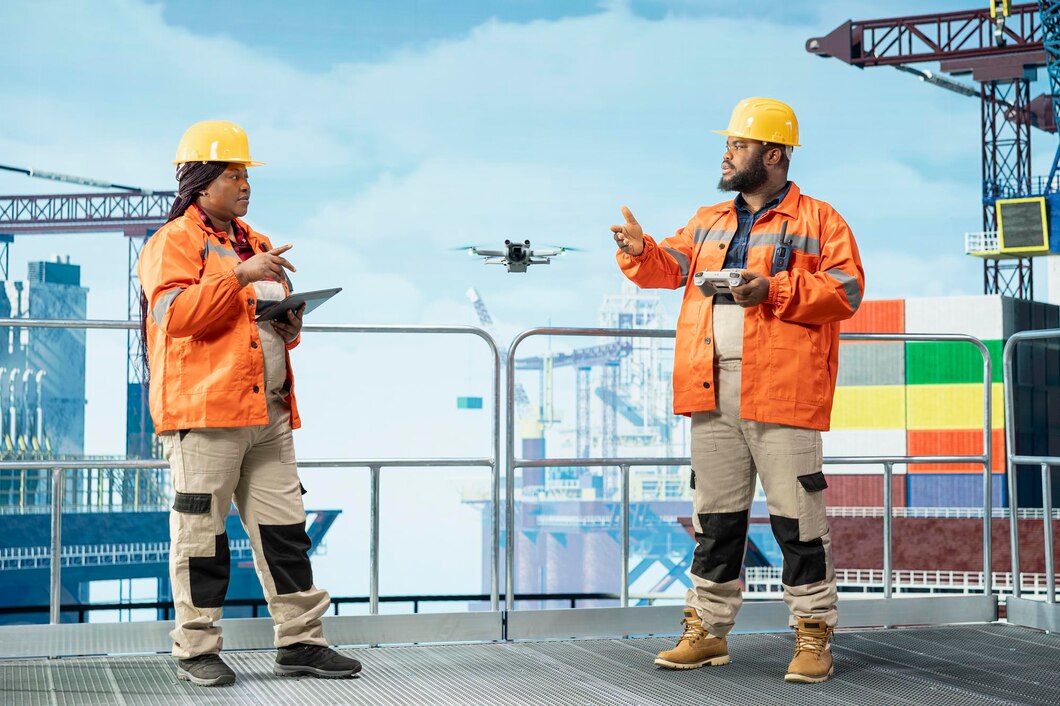
For facilities, infrastructure, and operational environments, drone footage:
Aerospace systems often involve processes that cannot be easily seen or understood through static visuals.
Video solves this by enabling:
Complex workflows can be presented in logical sequences, improving comprehension.
Animation can reveal internal systems, airflow, or data processing that would otherwise remain abstract.
If you are deciding between approaches, aerospace animation vs live action video can help determine the best format for your project.
The same core content can be adapted for:
This flexibility is what makes video essential across both operational and commercial functions.
Organizations across aerospace, defense, and first responder sectors use video at multiple stages of the lifecycle.
Across all use cases, the result is the same: faster understanding and better decision-making.
A defense-focused company needed to explain a counter-UAS system to both technical evaluators and procurement teams.
A product feature video was used to:
This improved both technical validation and sales engagement.
An aviation organization replaced traditional manuals with structured training videos.
The outcome:
A company producing aerospace composites used video to:
To achieve results, video must balance clarity with technical accuracy.
A specialized technical video production partner for aerospace teams ensures that messaging remains accurate, effective, and aligned with industry expectations.
High-quality aerospace video content requires a structured and collaborative approach.
This process ensures your investment delivers long-term value across the organization.
Aerospace, defense, and first responder industries require more than generic video production.
They demand:
Working with a team experienced in aerospace & aviation video production services ensures that your content reflects both the complexity of your technology and the clarity your audience needs.
It is the creation of video content that explains advanced aerospace systems using formats such as training videos, product demos, instructional content, and marketing videos.
It depends on the goal:
Yes. With proper planning, a single production can be adapted for training, sales, and marketing use cases.
Yes. When developed with subject matter experts, video can deliver both depth and clarity without oversimplifying.
Aerospace and aviation companies operate in environments where precision matters. Communicating complex systems clearly is essential for training, operations, and growth.
By combining training, instructional, product, and marketing video production, organizations can transform how their technology is understood and adopted.


If you're ready to simplify complex systems and improve how your organization communicates, explore our aerospace & aviation video production services and see how we help aerospace, defense, and first responder teams turn complexity into clarity.