Published:
April 8, 2026
Last Updated:
March 23, 2026
When planning a product video, many teams focus on visual style first. Should it be cinematic live-action footage? High-end 3D animation? Something that feels cutting-edge?
In complex B2B environments, especially across aerospace, defense, and industrial sectors, that is the wrong starting point.
The real question is:
What approach will communicate this product most clearly, accurately, and efficiently?
Both live-action and 3D product videos are powerful. Each solves different communication challenges. In many cases, the most effective solution is a combination of both.
A structured approach to product feature & usage video production ensures that the chosen format aligns with your product, your audience, and your operational constraints.
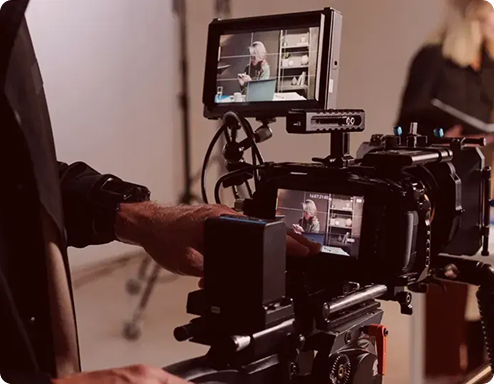
Live-action video captures real footage of your product, environment, and users. It is grounded in reality, which makes it highly effective for building trust and providing context.
For example, in aerospace ground operations or first responder equipment, seeing the product used in a real environment immediately reinforces credibility.
It answers a key buyer question: “What will this look like in our world?”
Live-action is also highly effective when combined with broader content such as Corporate Video Production or Training Video Production, where consistency of footage across multiple assets adds value.
Some aspects of a product simply cannot be captured with a camera.
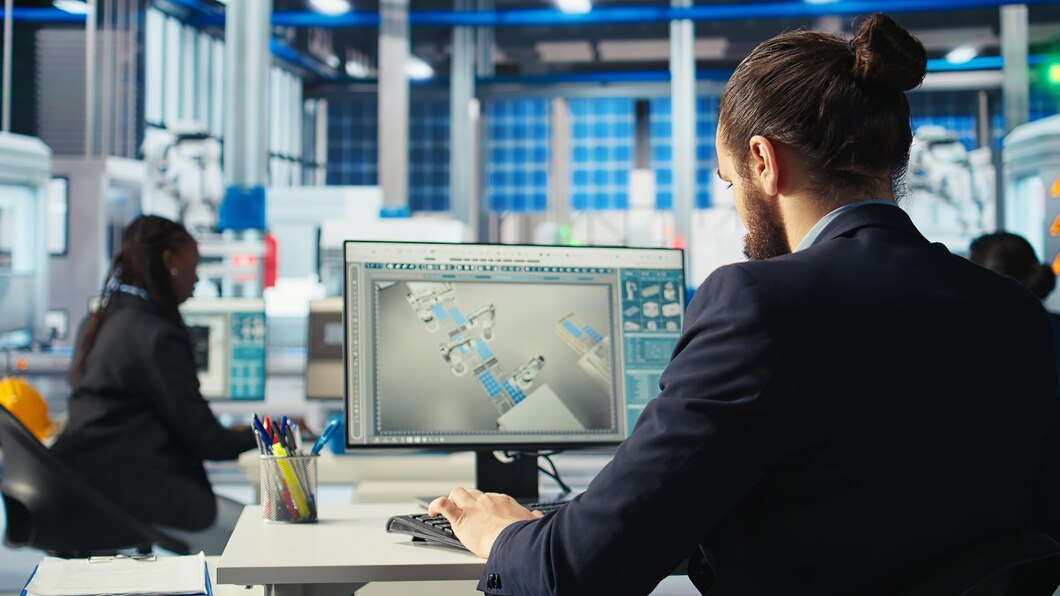
Internal mechanisms, invisible processes, and future-state concepts often require a different approach. This is where 3D animation becomes essential.
For example, a defense-related system may involve sensitive internal components that cannot be filmed. A 3D model allows you to demonstrate functionality without exposing restricted details.
It answers a different question: “How does this actually work inside?”
3D animation is also highly adaptable. Once created, models can be reused, updated, and repurposed across multiple outputs, making it a strong long-term asset.
In many cases, choosing between live-action and 3D is a false decision.
The most effective product feature videos often combine both.
This approach aligns closely with how technical buyers process information. They need both context and explanation.
It also supports strategies discussed in “Using Product Demo Videos Across the Entire Customer Journey,” where a single asset must serve multiple levels of understanding.
Beyond communication goals, practical considerations also influence the choice between live-action and 3D.
Live-action is often efficient when you are already producing related content such as training or marketing videos.
For products that evolve frequently, 3D can be more sustainable. Updating a model is often faster and more cost-effective than organizing a new shoot.
For stable, long-life equipment, live-action provides enduring value, especially when authenticity and environment are critical.
A strategic production plan often considers not just the immediate video, but how assets will be reused across sales, training, and support.
In regulated industries, production decisions are not purely creative. They are also operational and legal.
Aerospace, defense, and first responder environments often impose restrictions on:
This is where alignment with Compliance & Certification Support Video Production becomes essential.
A well-planned video ensures that:
Failing to consider these factors early can lead to delays, rework, or unusable content.
Organizations often make avoidable decisions when selecting a video approach.
Visual preference should never override communication clarity.
If a product is best understood through real-world use, 3D can feel unnecessary or abstract.
If key processes are hidden, live-action alone may leave critical gaps.
Decisions should consider how the video will be reused and updated.
Failing to account for restrictions can derail production late in the process.
The right approach is always driven by what the audience needs to understand, not what looks most impressive.
To determine the best direction, ask the following:
In many cases, the answer will not be one format, but a combination.
This is why planning is critical. The decisions made at this stage directly impact how effectively your video supports the sales process, as outlined in “How to Plan a Product Feature Video That Actually Drives Sales.”
The goal of any product video is not to impress. It is to communicate clearly and accurately.
Live-action shows reality.
3D explains complexity.
Hybrid approaches connect the two.
When aligned correctly, these tools create a complete understanding of your product, from external use to internal function.
Explore how product feature & usage video production can be tailored to your product, environment, and communication goals.
If you are unsure whether live-action, 3D, or a hybrid approach is right for your product, a structured consultation can help map the most effective path forward.
Discuss your use cases, constraints, and objectives to identify a solution that balances clarity, compliance, and production efficiency.


If you are building a long-term content strategy around complex products, consistency matters.
Our product feature and usage video production services are designed to support technical industries with precise, scalable, and high-impact video content.
Whether you are improving sales enablement, reducing onboarding time, or strengthening customer understanding, the right video strategy ensures your product is communicated clearly at every stage.